
If you’re Googling the best time to visit Tulum, you’re really asking a bigger question: When will Tulum feel like my kind of trip? Some people want dry skies and calm water. Others want lower hotel rates and fewer lines. And then there’s the seaweed factor, which can flip a dreamy beach week into a why is the ocean wearing a salad? situation.
The best time to visit Tulum depends on whether you prioritize weather, price, or beach conditions. Still, there are clear winners for most travelers, especially when you aim for the shoulder seasons.
This guide explains the best time to visit Tulum in 2026 by matching weather, crowds, seaweed risk, and cost to the kind of trip you want to take.
Best time to visit Tulum
For most travelers in 2026, the best time to visit Tulum lands in the sweet spot,” months that sit just outside peak crowds. Late fall and late spring tend to give you warm water, manageable humidity, and fewer packed restaurants. Major travel outlets consistently point to May and November as strong balance months, and they highlight late November into January as a lower seaweed window.
If your priority is calm weather, the dry stretch is a safe bet, since the region’s drier period runs roughly December through April, according to Mexico’s own protected-areas climate notes for the Tulum National Park zone.
If you want to stack the odds against major storms, remember the Atlantic hurricane season dates: June 1 through November 30, per the U.S. National Hurricane Center. That does not mean constant hurricanes, but it does mean the risk exists, especially later summer into early fall.
And if you want the blunt version: the best time to visit Tulum for classic beach Tulum is usually during the dry season, but the best time to visit Tulum for value and breathing room often sits just before or after that window.
Where is Tulum, and what kind of climate does it have?
Tulum sits on Mexico’s Caribbean coastline in the state of Quintana Roo, within the broader Riviera Maya. That location explains almost everything about timing: tropical heat, humidity that comes and goes, a rainy season that can feel dramatic for a few hours and then vanish, and a winter stretch that many travelers describe as easy mode.
Mexico’s National Commission of Natural Protected Areas (CONANP) describes the local climate as warm sub-humid, with a stated dry period from December to April and an annual average temperature of around 26°C in the Tulum national park zone. That lines up with what travelers feel on the ground: winter tends to deliver more comfortable days for long walks, ruins, cenotes, and beach time without the heavy summer air.
Tulum Seasons, Decoded: What Each Season Really Means for Your Trip
Tulum’s seasons matter less for sweaters and more for crowds, hotel rates, and how the beach behaves.
High season in Tulum
High season is when Tulum looks like the postcards and moves like a busy city. Before you lock dates, it helps to see what typically changes during this stretch.
| High season window | What it’s like | What changes first | Who it fits best |
| December to April | Drier feel, comfortable days | Hotel rates rise, reservations become necessary | First-timers who want reliable weather |
| Late Dec to early Jan | The busiest slice of the year | Limited availability, higher transport demand | Holiday travelers who book early |
| February to March | Consistent popularity | Crowds at beaches and popular restaurants | Couples, families, small groups |
That’s why the best time to visit Tulum for the weather isn’t always the best choice for your wallet or your patience.
Shoulder seasons
Shoulder seasons are the periods just outside peak season when conditions can still be excellent, but crowds and prices often ease. Many guides call out May and November as strong balance months for Tulum, warm enough for the beach, but less intense than peak winter weeks.
| Shoulder season month | Typical vibe | Price pressure | Planning advantage |
| May | Hotter days, lively but calmer than peak | Medium | Easier bookings, good beach-and-day-trip mix |
| November | Comfort returns, crowds build slowly | Medium to medium-high | Great compromise for weather and availability |
| Early December | Often pleasant before holiday surge | Medium to high | Strong value if you avoid late-month spikes |
| April (early) | Peak weather energy, slightly less dense | High | Good alternative to full peak crowds |
If you want the best time to visit Tulum without feeling swallowed by peak-season traffic, shoulder months are usually where you land.
Rainy months and hurricane season
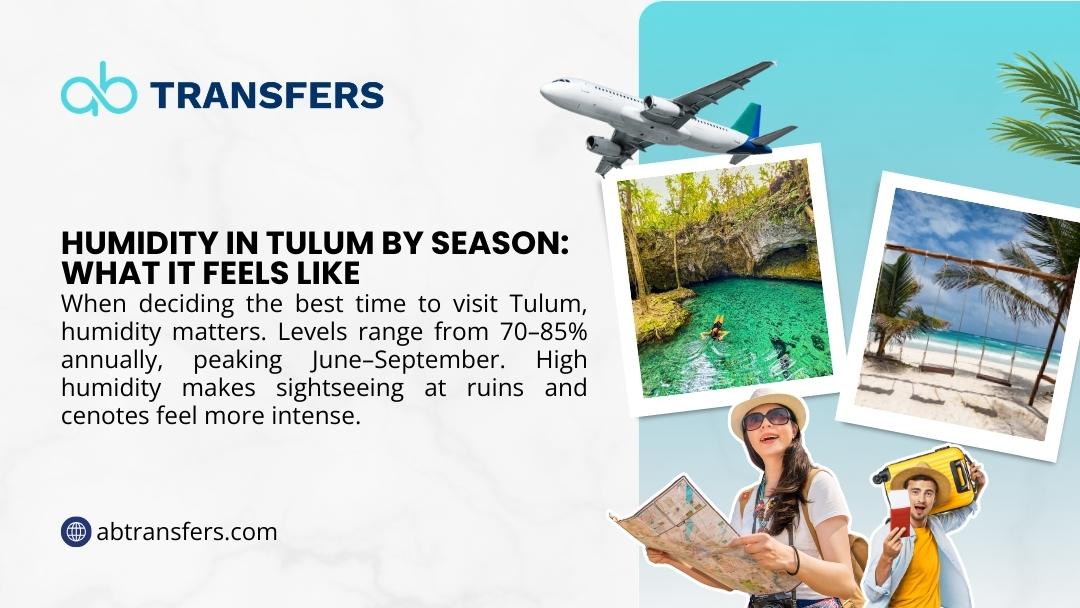
Rainy months don’t equal ruined trip. The bigger planning factor is tropical-system risk during hurricane season, which officially runs June 1 through November 30 for the Atlantic basin. Mexico’s protected-area notes for the Tulum zone also point to tropical storms and hurricanes as relevant natural phenomena for the region.
| Season window | What you’ll notice most | What to do differently | Who it works for |
| May to October | Higher humidity, more sudden showers | Plan mornings outdoors, keep flexible afternoons | Travelers who value deals and don’t mind weather shifts |
| June to November | Hurricane season (higher storm awareness) | Choose flexible bookings, track forecasts, and consider insurance | Budget travelers, flexible schedules |
| September to October | Often quieter, sometimes wetter-feeling weeks | Build backup indoor/inland days | People who want low crowds and accept uncertainty |
Month-by-month: the time of year that fits your travel style
| Month | Weather feel | Crowd level | Typical price pressure | Who it suits |
| Jan | Dry, comfortable | Very high | Very high | First-timers who want easy weather |
| Feb | Dry, warm | Very high | Very high | Couples, families, beach + ruins |
| Mar | Dry, warmer | High | High | Travelers who can book ahead |
| Apr | Dry-to-warm shift | Medium-high | High | People who like heat, fewer peak crowds |
| May | Hotter, mixed | Medium | Medium | Value + good vibe seekers |
| Jun | Humid, storm risk starts | Medium | Medium-low | Budget travelers with flexibility |
| Jul | Hot, storm awareness | Medium | Medium-low | Families with summer schedules |
| Aug | Hot, humid | Medium-low | Low | Deal hunters, inland activity fans |
| Sep | Wetter risk | Low | Low | Flexible travelers, not risk-averse |
| Oct | Transition month | Low-medium | Low-medium | Shoulder seekers, end-of-month planners |
| Nov | Calmer, warm | Medium | Medium-high | Best balance crowd/comfort |
| Dec | Early calm, late peak | High (late) | High (late) | Early Dec planners, holiday travelers |
Seaweed season in Tulum and how to plan around it
Seaweed season refers to periods when sargassum (a type of floating seaweed) accumulates along Caribbean shorelines, sometimes affecting water clarity and beach conditions. The Sargassum Watch System tracks regional conditions and outlooks that can affect the Caribbean and the Mexican Caribbean coast.
Here’s the practical part: seaweed is variable. It changes with winds, currents, and regional bloom conditions. Planning around it means building a trip that still feels great even if the shoreline looks different than your Instagram feed.
| What you’re planning for | What tends to help | The tradeoff |
| Cleaner beach odds | Aim for late fall to winter timing (many guides cite this) | Higher demand and higher rates during peak windows |
| Seaweed shows up | Shift to cenotes, lagoons, and inland routes | Less “classic beach day,” more exploration |
| Mixed conditions | Choose beaches known for cleanup efforts, stay flexible | You’ll need a plan B for some days |
If you want a trip that still wins even when the beach is unpredictable, start with a grounded itinerary of things to do in Tulum that doesn’t rely on perfect sea conditions.
Best time to visit Tulum without seaweed
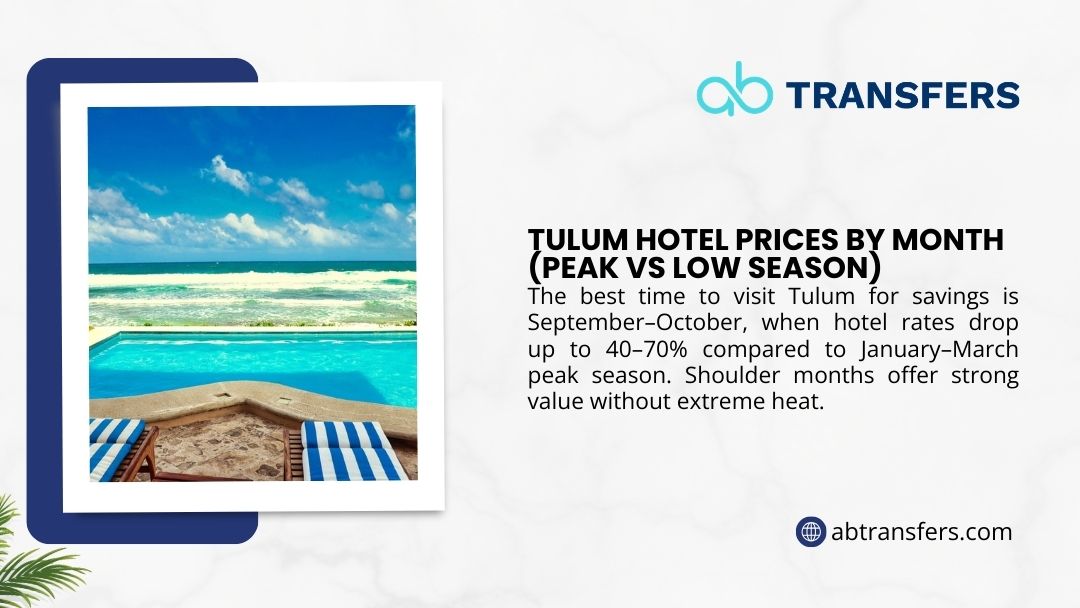
No month offers a guarantee, but mainstream travel guidance often points to late November through January as a lower-risk window for seaweed compared with warmer months. Treat this as better odds, not a promise.
| Timing window | Why travelers choose it | What to expect |
| Late November to early December | Balance of comfort and fewer holiday spikes | Pleasant days, building demand |
| Mid-December (early weeks) | Often calm before the holiday rush | Good weather, rising rates |
| January | Strong odds for clearer beaches per common guidance | Peak crowds, peak pricing |
For seaweed-proof swimming options year-round, cenotes stay a strong bet, as it helps you choose spots that match your comfort level and travel style.
Best time to visit Tulum for specific activities
The best time changes depending on what you plan to do. Someone chasing ruins and long walks needs different conditions than someone chasing beach club days.
| Activity | Best month range to target | Why it works |
| Mayan ruins | December to March | Cooler, drier-feeling days support longer visits |
| Cenotes | Year-round (best in shoulder months for crowds) | Less dependent on beach conditions; shoulder months ease pressure |
| Beach-first trip | December to April | Drier stretch; more reliable beach days |
| Budget travel | June to October | Lower demand often brings better value, with weather tradeoffs |
| Quiet, low crowds | September to October | Often the quietest streets, but with higher weather uncertainty |
For inland day trips, the shoulder seasons can be a gift. You get warmth, fewer crowds, and often better availability for private routes.
Events and peak travel weeks that change everything
Timing your trip around major events can dramatically change what Tulum feels like. Some weeks bring cultural depth and local tradition. Others turn the town into a full-scale party hub with packed hotels, higher transport demand, and limited last-minute flexibility. If you’re choosing the best time to visit Tulum, these dates matter just as much as the weather.
| Period / Event | When it happens | What to expect on the ground | Planning impact |
| Holiday peak weeks | Late December through the first week of January | The busiest stretch of the year; high demand across hotels, restaurants, and transport | Book everything well in advance, or expect limited options |
| Zamna Festival | December–January | Large-scale electronic music festival drawing international crowds | Prices spike, nightlife dominates, late-night transport demand rises |
| Day Zero Festival | January | One-night destination festival with global DJs | Very high short-term demand; accommodations fill fast |
| Papaya Playa Project events | Mainly December–March | Frequent music and beach parties | Beach zone stays lively; reservations become essential |
| Mayan New Year | December 21–22 | Ceremonial celebrations tied to the winter solstice | A quieter, more spiritual atmosphere at archaeological and cultural sites |
| Vernal Equinox | March | Visitors gather at ruins for seasonal rituals | Popular at Mayan sites; arrive early to avoid crowds |
| Semana Santa (Easter) | March or April | Major domestic travel period with family tourism | Roads, beaches, and cenotes become busy |
| Fiesta Tradicional de la Cancha Maya | October 7 | Community-based celebration of Mayan heritage | Cultural focus, fewer international tourists, deeper local connection |
If your idea of the best time to visit Tulum includes music, nightlife, and high energy, late December through January delivers that experience in full volume. Just expect peak pricing and packed venues.
If you’re after something more grounded and culturally rich, October and mid-December offer meaningful traditions without the same level of congestion. Events like the Fiesta Tradicional de la Cancha Maya provide a rare window into living Mayan culture, far removed from the party-centric image many visitors associate with Tulum.
For travelers who prefer balance, avoiding these peak weeks often leads to smoother logistics, more availability, and a calmer pace, especially when pairing shoulder-season dates with early planning.
Is Tulum safe, and does the season matter?
The U.S. State Department’s Mexico travel advisory lists Quintana Roo as Exercise increased caution, and it specifically mentions paying attention after dark in downtown areas of Cancun, Tulum, and Playa del Carmen. That’s not a reason to panic. It is a reason to plan transport responsibly, keep late-night movement simple, and avoid unnecessary risk, especially during high-demand seasons when nightlife and crowds intensify.
Season matters in a practical way: peak months bring more people, more nightlife, and more opportunity for petty crime. Quieter months can feel calmer, but fewer people out late can also mean fewer witnesses and less ambient security. Either way, the basics stay the same: stay in well-lit areas at night, use reputable transport, and keep valuables low-profile.
The month you choose changes the whole trip, and that’s why it matters
The best time to visit Tulum is not one magic week. It’s a match between your priorities and the reality on the coast.
If you want the smoothest weather, aim for the dry stretch. If you want the best balance of comfort and fewer crowds, May and November keep earning their reputation. If you want lower rates, summer and early fall can work well when you pack patience and flexibility, with hurricane season dates in mind. And if seaweed worries you, the late-fall-to-winter window can help, even though nothing is perfect every year.
If you want a plan that fits your dates, your budget, and your travel style, without getting stuck in shared-tour chaos, reach out directly and map it with locals. The fastest way is to message us on WhatsApp.
