
A good Tulum itinerary 3 days should feel balanced, not rushed. Three days in Tulum is enough to see the essentials if the route makes sense from the start. That means one day for the coast and the archaeological zone, one day for cenotes and food, and one day for either wildlife, snorkeling, or a deeper Maya-history detour inland. That’s the sweet spot for first-time visitors who want the postcard version of Tulum, Mexico, without turning the trip into a blur of taxi receipts and check-in times.
This matters because Tulum is not as compact as it first appears. The beach zone, the town, the cenote corridor, the Tulum ruins, and day-trip stops such as Akumal or Cobá sit in different pockets of the Riviera Maya. Plenty of guides make 3 days in Tulum sound easy, then quietly stack too much into each day. A stronger 3-day Tulum itinerary leaves room for the places people actually remember, not just the places they manage to tick off.
Travel demand in the Mexican Caribbean remains huge. Quintana Roo’s tourism authorities reported that the region entered 2026 with a massive 88.3% hotel occupancy rate, with Tulum specifically maintaining a strong 83.5% even outside of major holidays. That helps explain why timing, transport, and crowd strategy matter so much when you plan a Tulum itinerary 3 days in high season.
How many days in Tulum do you really need?
3 days works very well for a first trip, four or five feels more relaxed, and anything shorter becomes a quick weekend in Tulum rather than a rounded stay. So when people ask how many days you need in Tulum, or how many days to spend in Tulum, I usually come back to the same point. A well-planned tulum itinerary 3 days gives you ruins, cenotes, sea, and good food without wasting a whole day in transit.
That also answers another common search: how long to stay in Tulum. If your aim is pure downtime, you can stay longer. If you aim to see the best of the area, a thoughtful Tulum 3-day itinerary is enough. You do not need to chase every famous spot in the Yucatán Peninsula to feel like the trip was worth it. In fact, the opposite is often true. The more realistic the route, the better the trip.
| Trip Length | Best For | Reality Check |
| 2 days | Quick beach break | Works, but feels rushed |
| 3 days | First-timers | Best balance of sights and ease |
| 4–5 days | Slower travel | More beach time and one major day trip |
| 6+ days | Deep regional trip | Better if you also want Valladolid or Mérida |
Why this route works
A strong tulum itinerary 3 days works best when each day has its own pace and purpose. Day 1 starts with the ruins because that is when the weather is easier, the light is softer, and the archaeological site is far more pleasant before the heaviest crowds arrive.
Day 2 shifts to cenotes because it gives the trip a slower middle stretch, which helps after a hot coastal start.
Day 3 stays flexible on purpose. Some travelers want wildlife and snorkeling, some want more Maya history, and some simply want one last easy beach day before departure. That sequence keeps the trip practical without making it feel mechanical.
Before you go: what changes the trip in 2026
Before you lock in your Tulum itinerary for 3 days, there are a few details worth knowing. According to the INAH, the Tulum archaeological site is open from 8:00 a.m. to 5:00 p.m., with last access at 3:30 p.m. However, the entry process has become more complex in 2026 due to the full integration of the Parque del Jaguar (Jaguar National Park).
Foreign visitors should now budget approximately 515 pesos (roughly $28–$30 USD) for the total experience. This breakdown typically includes the 210 peso INAH entrance fee, a 120 peso CONANP conservation bracelet, and a 295 peso Jaguar National Park fee.
That’s why the old habit of we’ll just show up whenever can backfire. If you want to avoid the crowds, beat the heat, and keep your day from slipping away, the ruins should go first thing in the morning. Additionally,
Transport also shapes the whole trip. Many travelers still arrive through Cancun International Airport, while others now consider Tulum’s newer airport. Either way, ground logistics matter more than people expect, especially if you want to move between the beach zone, town, cenotes, and day trips without wasting half your stay.
If you are still sorting that part out, this guide on how to get to Tulum can help you compare the main arrival options.
Day 1: ruins first, then sea, then dinner in town
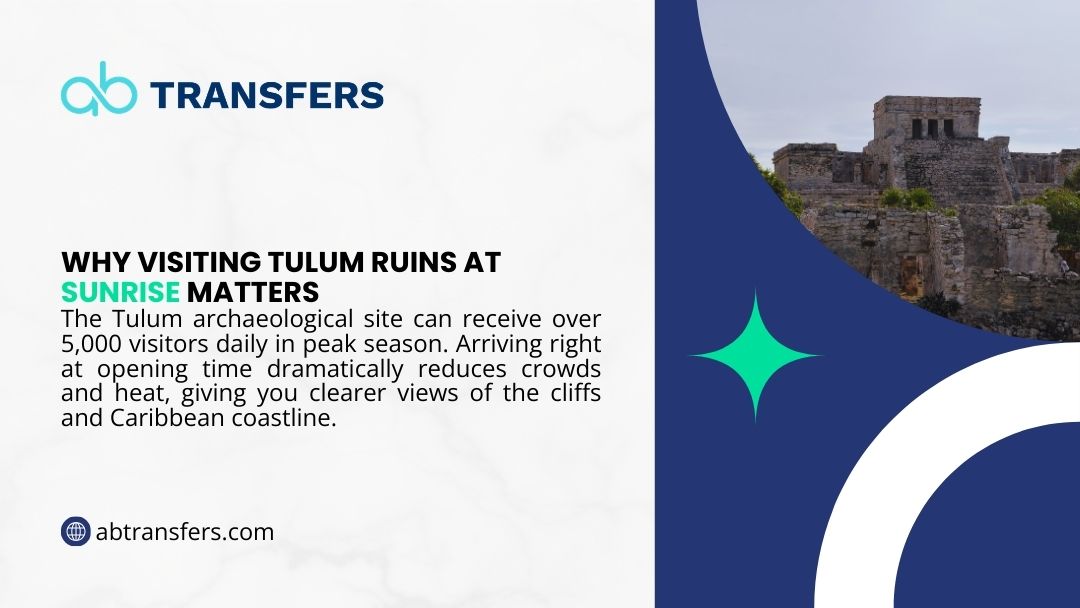
The smartest Tulum itinerary 3 days begins with the coast. Start your morning at the Tulum Archaeological Zone (Mayan ruins) above the Caribbean, because that is still the most iconic view in Tulum and, frankly, one of the few places that fully lives up to the hype. The ruins are best early, before the sun turns sharp and the crowds build. This is the one stop where timing is everything.
Set aside two to three hours for the site and the coastal viewpoints. A lot of travelers rush through this part just to say they have seen it. That would be a mistake. The value is not only in the stones. It is in the setting, the sea, the sense of why this port city mattered, and the fact that visiting Tulum starts to make more sense once you see its geography in person.
Pro Tip for 2026: If you are staying in the Hotel Zone, the south access to Parque del Jaguar is now free for pedestrians and cyclists, but there is no car parking. If you are driving, use the main northern entrance where the new “Museum of the Eastern Coast” is located to access official parking lots (around 160 pesos)
After the ruins, spend the afternoon on the coast. You can keep it simple at one of the public beaches, or choose a low-key beach club if you want shade, lunch, and a place to slow down. But here’s the thing: Day 1 should not become a marathon. The best Tulum itinerary for 3 days leaves some breathing room.
By evening, head into town for dinner. Tulum’s better meals are not always in the beach zone. Some of the best value sits in centro, where dinner feels less staged and more rooted in local life. If you need ideas, this roundup of the best Tulum restaurants is a useful next stop.
| Day 1 Timing | What to Do | Why It Works |
| 8:00–11:00 | Tulum archaeological zone | Cooler weather, fewer crowds |
| 11:30–4:00 | Beach time | Easy reset after the site |
| 7:00 onward | Dinner in town | Better prices and a more local feel |
Day 2: cenotes, a slower afternoon, and the side of Tulum people remember
No strong Tulum itinerary 3 days skips cenotes. Day 2 should be about freshwater, a bit of flexibility, and a slower rhythm. This is the day that tends to feel most like a holiday.
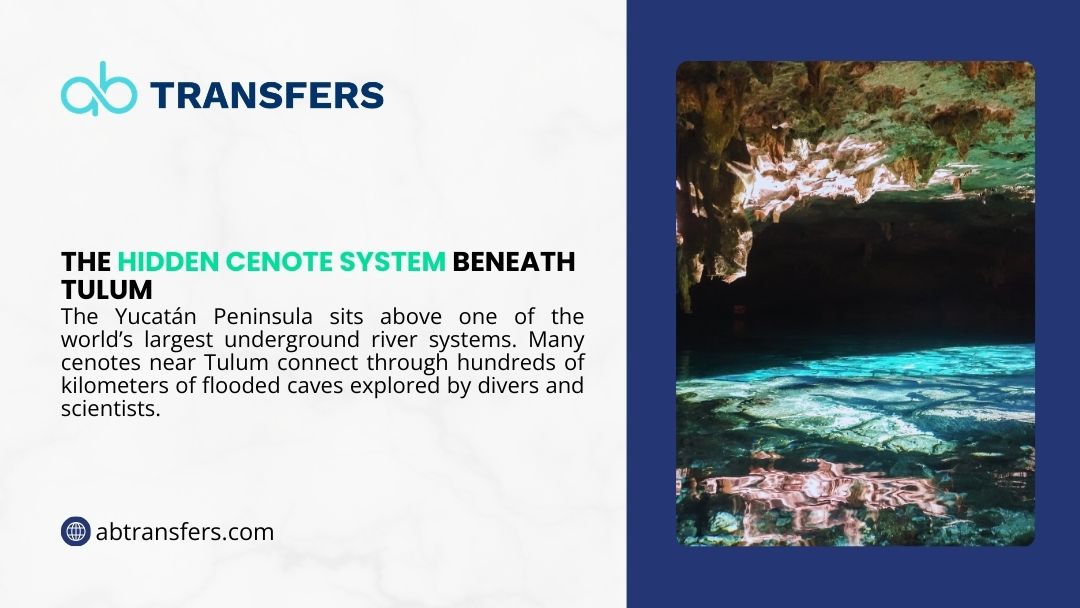
For many first-timers, Gran Cenote is the obvious starting point because it is famous, photogenic, and easy to pair with other stops. But notoriety cuts both ways. If you go late, you pay for the popularity with noise and crowds. Go early, or choose a lesser-stressed option from a broader list of the best cenotes in Tulum. As of 2026, many popular cenotes have implemented eco-friendly rules, strictly forbidding any sunscreen or insect repellent before entering the water.
After your cenote stop, keep the afternoon open. A beach break works. A long lunch works. A scooter ride back toward town works. Be aware that sargassum (seaweed) remains a seasonal factor. In 2026, satellite forecasts suggest that the seaweed season may peak earlier, often between July and August. If the beaches are messy, use this afternoon to explore the boutiques and art installations in Aldea Zama or the Hotel Zone.
Day 3: pick the version of Tulum that fits you best
By Day 3, a good 3-day Tulum itinerary stops trying to please everyone. This is where the trip becomes personal. You have three smart directions.
- Akumal nature day: The first is Akumal. If you want a coastal nature day and a softer pace, Akumal makes sense. It is a practical pick for travelers interested in wildlife and guided tour options rather than another long transfer inland. A private tour to Akumal and Monkey Sanctuary suits families and couples especially well.
- Cobá inland day: The second is Cobá. If they want another historic site without the same atmosphere as the coast, Cobá changes the tone of the trip. The jungle setting feels very different from the sea-facing Tulum ruins, which is exactly why this stop works so well in a Tulum itinerary of 3 days. The biggest news for 2026 is that the Nohoch Mul pyramid at Cobá has officially reopened for climbing, but with a major twist. To preserve the ancient stone, INAH has installed a specialized wooden staircase over the center.
INAH lists Cobá’s hours as 8:00 a.m. to 5:00 p.m., with last access at 4:00 p.m. and separate access limits for the Nohoch Mul pyramid. The agency also states that access to Nohoch Mul runs until 3:30 p.m., with group-size limits and a time limit at the summit. A private tour to Cobá ruins and cenotes is the strongest fit for travelers who want more Maya history and a less beach-heavy last day.
- Slow local day: The third is to stay local and keep it slow. Not everyone needs an ambitious final day. Sometimes, the best answer to how long to spend in Tulum is to use the last stretch of your Tulum itinerary, 3 days for what the trip has been missing so far: an unhurried breakfast, one more swim, a proper meal, and a departure that does not feel like damage control.
| Day 3 Style | Best For | Suggested Match |
| Akumal Nature Day | Families, wildlife lovers | Coast + snorkeling + easy pace |
| Cobá inland day | History-focused travelers | Ruins + cenotes + jungle feel |
| Slow local day | Short-stay visitors | Beach, food, and stress-free wrap-up |
Where to stay for this Tulum itinerary 3 days
Where you sleep changes the entire Tulum itinerary by 3 days. If you stay in town, you usually get better value, easier food access, and simpler logistics. If you stay on the beach, you pay more for atmosphere and sea access. Neither is wrong. They just suit different priorities.
For most first-time visitors, Tulum town is the more practical base. It puts you closer to local restaurants, everyday services, and easier pickup points for transfers or tours. It also makes a short stay easier to manage because you are less locked into beach-zone pricing for every meal and every ride.
The beach zone makes more sense when the stay is short, the budget is looser, and the traveler wants the atmosphere to be part of the trip itself. If that is the goal, staying near the coast can feel worth the premium. But if the goal is to see more with less friction, the town usually wins.
A simple rule helps here. Stay in town if your trip is about movement. Stay near the beach if your trip is about mood. For a first Tulum itinerary, 3 days, the town tends to be the safer choice.
How to get there without wasting time
The transport piece deserves its own space because it affects every day of your Tulum itinerary for 3 days. Travelers arriving from Cancún often compare private transfer, bus, rental car, and taxi combinations. Those trade-offs are not minor. They shape cost, comfort, and how much energy you still have after arrival.
A private transfer is usually the easiest option if convenience matters most, especially after a long flight or when traveling with family, bags, or a tight schedule. ADO works well for budget-conscious travelers, but it is less flexible once you factor in hotel access and local taxi costs. A rental car can make sense for travelers who plan to explore beyond Tulum, though parking, navigation, and road conditions still need some thought.
Another point airport choice does not solve the local transport puzzle by itself. Even if you land closer, you still need a clean plan for getting between town, the beach road, cenotes, and any day trip stops. That is why this part of the trip deserves more attention than people usually give it.
This is also where related searches like Cancun and Tulum itinerary or Cancun Tulum itinerary come into play. If someone only has three days total, splitting the stay between both destinations usually makes the trip feel rushed. A dedicated Tulum itinerary 3 days is stronger than trying to force Cancún into the same short window.
Best time to visit Tulum for a three-day trip
Season matters more than people think. High season typically brings the easiest beach weather, but it also brings fuller hotels, heavier roads, and more crowded headline sights.
State tourism data for Quintana Roo’s January–August 2025 reporting period put Tulum’s average hotel occupancy at 70.9%. In March 2025, the same report shows Tulum at 78.7%, while August sat notably lower at 58.6%. That gap helps explain why the same Tulum itinerary 3 days, can feel very different depending on the month.
If the aim is a smoother Tulum itinerary, 3 days, shoulder months often work better than peak holiday weeks. You still get warm weather, but the trip tends to feel less compressed. For a fuller seasonal breakdown, explore the best time to visit Tulum.
Practical budget for a Tulum itinerary 3 days
A realistic Tulum itinerary for 3 days does not need to be ultra-cheap or wildly expensive. It depends on where you stay, how you move around, and whether you prefer self-planning or a few arranged experiences. Here is a more useful way to frame it.
| Budget Level | Stay | Daily Style | Estimated 3-Day Range |
| Value | Town hotel or guesthouse | Local meals, ADO or mixed taxi use, self-planned ruins and cenotes | $220–$420 USD |
| Mid-range | Boutique stay in town or on the edge of the beach zone | Mix of private transfers, cenotes, better restaurants, and one organized activity | $450–$850 USD |
| Comfort | Beach hotel or upscale boutique | Private transfers, guided tours, premium dining, and easier logistics | $900–$1,600+ USD |
The exact total shifts by season, but the pattern stays fairly consistent. Accommodation and transport usually shape the budget more than archaeological-site entry fees. That is one reason a well-planned private day or transfer can sometimes save money overall, especially when it cuts down on fragmented taxi spending.

Common mistakes that ruin the trip
The biggest mistake in a Tulum itinerary for 3 days is trying to do too much. The second is poor timing at the ruins. The third is assuming every stop is close to the next one. Tulum rewards thoughtful routing and punishes wishful planning.
Another mistake is turning every afternoon into a race between beach clubs, cenotes, and restaurant bookings. Tulum does not need that kind of pressure. A cleaner plan almost always produces a better trip.
Make your 3 days in Tulum count
The best tulum itinerary 3 days is not the one with the most stops. It is the one who uses time well. Start with the ruins while the day is still fresh, save cenotes for the stretch when the trip should feel loose and memorable, and use Day 3 for the version of Tulum that actually suits the traveler in front of you.
If you want to keep the trip simple, this route already works as a self-planned guide. If you want it to feel easier from the moment you land, AB Transfers can help you turn the same Tulum itinerary 3 days into a smoother private trip with reliable transport, flexible timing, and curated local experiences that fit the way you actually want to travel.
