
A tulum itinerary 6 days sounds simple on paper. Six days, a handful of beaches, a few cenotes, maybe a ruin or two. But once you’re actually there, things don’t unfold that neatly. Tulum has this way of stretching time.
Mornings feel slow, afternoons get hot and quiet, and evenings somehow arrive without much warning. That’s why planning too tightly doesn’t really work here. You need structure, yes, but also a bit of space between things. Six days gives you that space. Not just to see Tulum, Mexico, but to adjust to it.
Tulum Itinerary 6 Days: What You Can Realistically Do and See
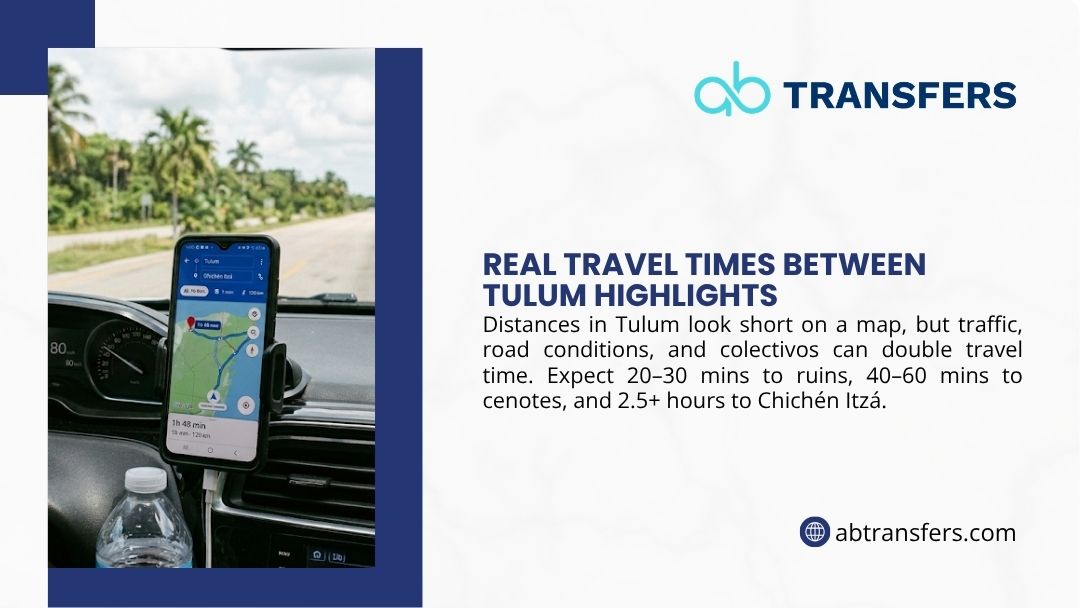
If you map out a Tulum itinerary 6 days the same way you would a city trip, you’ll probably end up frustrated. Distances are longer than they look, traffic builds in unexpected places, and some experiences simply take more time than expected.
A better approach is to think in layers rather than a strict schedule. Early days help you settle in. The middle carries the heavier experiences, ruins, day trips, and longer drives. The last part slows down again. Here’s a rough structure that tends to work well:
| Day | Main Focus | Key Highlights |
| Day 1 | Arrival & Beach Zone | Settle in, Tulum beach, beach club, sunset |
| Day 2 | Tulum Ruins & Gran Cenote | Archaeological site, snorkeling, playa ruinas |
| Day 3 | Cenotes Deep Dive | Gran Cenote, Dos Ojos, Calavera, jungle roads |
| Day 4 | Day Trip: Chichén Itzá & Valladolid | UNESCO World Wonder, colonial town, cenote dip |
| Day 5 | Sian Ka’an Biosphere Reserve | UNESCO wetlands, boat canals, and wildlife |
| Day 6 | Cobá Ruins & Departure Prep | Jungle pyramid, Aldea Zama, final evening |
That rhythm matters more than the exact activities.
Day-by-Day Tulum Itinerary (6 Days)
Day 1: Arrive, Breathe, and Let Tulum Find You
People tend to do too much on the first day in Tulum. They land, feel that holiday rush, and try to turn arrival day into a full sightseeing day. Most of the time, that backfires. Tulum is easier to enjoy when you ease into it. The place is not built for urgency, and you feel that almost right away.
Whether you come in through Cancún Airport or Tulum International Airport, the first decision that shapes the rest of the day is your transfer. After a flight, luggage, immigration lines, and airport confusion, most travelers do not want one more layer of logistics.
Shared shuttles can work, but they can also be slow, crowded, and full of extra stops. A private transfer costs more, yes, but it usually saves your mood on day one. That fits the way AB Transfers presents itself: private, reliable transportation that takes the stress out of arrival and lets the trip start smoothly.
Once you check in, leave the temptation to make the most of every minute alone for a bit. If you are staying in Tulum Centro, Aldea Zama, or near the beach road, the first afternoon should be simple. Get settled. Figure out where you are. Then head toward the sea.
If you are on the beach side already, that part is easy. If you are in town, it is a short ride. The moment you reach the sand, the whole tone changes. Tulum beach really does have that unreal shade of blue people talk about.
For sunset, some people like a rooftop and the whole scene that comes with it. Others would rather keep it low-key and eat somewhere good. On balance, the town usually makes more sense the first night.
Tulum Centro has more variety, better prices, and less pressure to perform the Tulum experience than a lot of the beach strip. You can always do the big beach dinner later. On night one, it is usually enough to eat well, get some sleep, and let the place settle in.
Day 2: Tulum Ruins and Playa Ruinas at Sunrise
Day two is the non-negotiable day. Nobody comes to Tulum, Mexico, and skips the ruins, and rightly so. The Tulum ruins are part of what makes the destination what it is. Even travelers who are not usually drawn to archaeological sites tend to connect with this one because the setting does so much of the work.
The site sits 12 meters above the Caribbean on a limestone cliff, and that combination of old stone, sea wind, and bright water gives it a character that inland ruins do not have.
It dates to the late Maya period and is often described as one of the last cities built before the Spanish arrived. That historical detail matters, but honestly, the first thing most people notice is the view.
Go early. The site opens at 8 am, and arriving near opening changes the whole experience. It is cooler. The light is softer. You can actually pause without being pushed along by the flow of people. By mid-morning, especially in high season, the heat picks up, and the place feels very different.
From town, the ride is quick. A taxi works. A colectivo works. A private driver works best if you want the day to feel easy from start to finish. There is a small train from the entrance area if you do not want the extra walk in. Inside, the site is not huge, but it rewards attention.
El Castillo gets the most photographs, understandably. The Temple of the Frescos is one of the more interesting structures once you know what you are looking at. The Temple of the Descending God is smaller but memorable.
A private tour to Tulum Mayan Temples and Ruins can make a real difference here because otherwise a lot of visitors end up walking through a historically important place with only fragments of context.
After the ruins, head down to Playa Ruinas. It is a relatively small beach directly below the archaeological site. It’s one of the most beautiful beaches in Mexico. Swim here, or simply sit. There’s no beach club, no vendors pushing cocktails. Just the water, the cliffs, and the sound of the Caribbean Sea.
For the afternoon, Gran Cenote is an easy next stop. It is close enough (around 4 km) to town to make sense on the same day, and it is popular because it is genuinely beautiful, not just because it is famous.
The water is clear, the rock formations are striking, and the half-covered sections give it a slightly cave-like feel without making it feel too dark or enclosed. Timing matters. If you go right in the middle of the day, you will share it with plenty of other people. To avoid the crowd, go before 11 am or after 3 pm.
Day 3: Cenote Day: The Yucatán’s Underground World
The beach gives you one version of this region. Cenotes give you another, and in some ways, the second one is the more memorable.
Across the Yucatán Peninsula, thousands of cenotes connect to underground river systems that run beneath the surface. On a map, that sounds abstract. In person, it does not.
You climb down into freshwater that looks almost still from above, then turns glass-clear once you are in it. Some cenotes are wide open and bright under the sun. Others are half-shaded by rock and tree roots. A few feel almost hidden until you are standing at the edge.
That is why day three works best when you commit to it and make it a proper cenote day instead of trying to squeeze one swim into a packed schedule. The main challenge is not deciding whether to go. It is figuring out how to move between them without wasting half the day.
The best cenotes around Tulum are spread in different directions, and the difference between a smooth day and a messy one is often just transport. That is part of the AB Transfers value proposition too: flexibility, local knowledge, and the ability to shape the day around what the traveler actually wants rather than around fixed group timing.
- Gran Cenote is the easiest name to start with because nearly everyone has heard of it.
- Dos Ojos is a different experience, cooler and more cave-like, with a stronger sense of being inside the limestone system itself.
- Calavera is smaller and looser in feel, the kind of place people choose when they want something a little less polished.
- Cristal and Escondido, farther south, often appeal to travelers who want a more open-air swim and a less packaged atmosphere.
A good cenote day does not need five stops. Two or three is enough. Start early, spend real time in each place, then move on. That is usually better than racing from one to the next for the sake of saying you saw more. Tulum can be like that in general. The best days are often the ones with a little breathing room.
There is also history under all of this. To the ancient Maya, cenotes were not just water sources. They were sacred places tied to ritual, belief, and survival. That older meaning is part of why they still feel different from an ordinary swim spot. Even now, in the quieter cenotes especially, there is a sense that these places belong to a deeper story.
Day 4: Day Trip to Chichén Itzá and Valladolid
This is the biggest excursion in the six-day plan, and it asks for an early start. It is also one of the days that people remember most clearly afterward.
Chichén Itzá is famous enough that some travelers go in expecting it to feel overrated. Usually, it does not. The scale of the site, the geometry of the buildings, and the sheer amount of history packed into the place tend to cut through that skepticism pretty fast.
It is a long drive from Tulum, though, and that is exactly why timing matters. Leave early enough to get there close to opening, before the site becomes crowded and hot.
El Castillo is the centerpiece, but the rest of the complex matters too. The Great Ball Court is enormous and gives a better sense of the site’s scale than photographs ever do. The Temple of the Warriors adds another layer.
The Sacred Cenote is one of those places that stays with you because of what it meant in the ceremonial life of the city. With a knowledgeable local private tour to Chichén Itzá, Valladolid and Yokdzonot Cenote, the visit tends to feel coherent. Without one, many travelers get the broad strokes and miss the rest.
On the return, Valladolid is the right place to slow the day back down. It’s a colonial town about 40 kilometers east of Chichén Itzá, with a cathedral-fronted central plaza, bright facades, and a far more relaxed pace than either Tulum or Cancún. Cenote Zací sits right inside the town, a dramatic open sinkhole where you can swim after the ruins.
It is also one of the better places to eat during a Yucatán day trip. Food in Valladolid (poc chuc, papadzules, cochinita pibil) often feels more rooted in the region and less shaped by tourist expectations than what you get in many of the more image-driven parts of Tulum.
A cenote stop after Chichén Itzá and before the drive back is usually a smart addition if time allows. It breaks the day up and keeps it from becoming too one-note. More importantly, it gives the itinerary a bit of flexibility, which is often what makes a private day plan feel worth it.
Back in Tulum by early evening, you probably will not want much fuss. Dinner in town makes sense here. Something straightforward, something cold to drink, and an early night if you need it.
Day 5: Sian Ka’an Biosphere Reserve: a UNESCO Wilderness
A lot of travelers skip Sian Ka’an because it does not market itself the way other parts of the Riviera Maya do. That is also exactly why some people end up loving it.
Sian Ka’an shows a quieter side of the region, one that feels older, less staged, and not especially interested in entertaining you every few minutes. It is located on the east coast of the Yucatán Peninsula, a huge protected reserve of lagoons, mangroves, wetlands, coastal habitat, and marine ecosystems. On paper, that sounds broad. On the ground, it feels like space and silence.
The reserve became protected in the 1980s and later received UNESCO World Heritage recognition. Its size is enormous, and the biodiversity is real, not decorative brochure language.
Birds (379 species), mammals (115 species), marine life, dense vegetation, and this is one of the ecological anchors of the region. But what tends to stay with visitors is not the list of species. It is the atmosphere. Sian Ka’an asks for patience. If you bring that with you, it gives a lot back.
From Tulum, Muyil ruins are the easiest access point for most people. From there, you move into the lagoon side of the reserve, where old canals and broad wetland landscapes shape the route. Boat trips here are not dramatic in the same way as a ruins visit is dramatic.
They are better than that, in a way. They are slow. You notice birds. You notice the sound of the water. You pay attention to mangroves, sky, movement, and all the quiet details that disappear in busier places.
Give this day the time it needs. Bring water, sun protection that meets reserve guidelines, insect repellent, and shoes that can get wet. If you treat it like a quick attraction, it will feel underwhelming. If you treat it like a full day in a protected landscape, it becomes one of the strongest parts of the trip.
By the time you get back to Tulum, the contrast is striking. You come out of a place defined by stillness and return to a town full of sound, restaurants, scooters, and movement. That evening can go either way. Beach dinner if you want one last polished night out. Town, if you want something easier.

Day 6: Cobá Ruins, Final Wanderings, and the Road to the Airport
Cobá is close (45-47 kilometers northwest) enough to Tulum to fit well on the last full day, but different enough that it does not feel repetitive after visiting the coastal ruins or Chichén Itzá.
The first difference is the setting. Tulum ruins are exposed, bright, and shaped by the sea. Cobá feels inland and shaded, with long paths through the jungle and a site layout that spreads out instead of concentrating everything in one dramatic line. That gives the visit a different mood from the start. It is less about a single view and more about moving through the landscape itself.
Nohoch Mul (Ixmoja pyramid) is the headline attraction. It is one of the tallest (42 meters (138 feet)) pyramids in the peninsula, and the jungle view from the top is what many travelers come for. Access rules can change, so checking current conditions before visiting is important.
Even beyond that pyramid, Cobá has a sense of scale that feels satisfying on the last day. You can rent a bike inside, which is usually the easiest way to get around the site without dragging the day out too much.
A cenote stop on the way back works well if your departure timing is not too tight. It gives the day one last water experience and keeps the final stretch of the trip from feeling like a straight countdown to the airport.
This is another place where flexible private transport helps. You are not trying to match your last day to a rigid timetable built for a large group. You can shape it around your own flight, your energy level, and what you still want from the trip.
Back in Tulum, keep things light. Aldea Zama is a good area for a short wander, coffee, or lunch. It sits between town and the beach road, and that in-between quality feels right for the last day. You are still in Tulum, but you are already beginning to leave it.
For the transfer back to Cancún Airport or Tulum Airport, direct private transport is usually the cleanest option. By this point in the trip, most travelers have figured out that simplicity is worth paying for when it reduces friction. A direct ride, no extra hotel stops, no guessing, no awkward timing, that is often the best ending.
Here’s a quick reference for the things to do in Tulum that this itinerary covers, alongside a few that didn’t fit but deserve mention:
| Activity | Time Needed | Best Day in Itinerary | Crowd Level |
| Tulum Ruins | 2–3 hours | Day 2 | High (go early) |
| Gran Cenote | 1.5–2 hours | Day 2 or 3 | High (go early) |
| Chichén Itzá | 3–4 hours | Day 4 | Very high (go at opening) |
| Valladolid | 2 hours | Day 4 | Low-medium |
| Sian Ka’an | Full day | Day 5 | Low |
| Cobá Ruins | 2–3 hours | Day 6 | Low-medium |
| Cenote Dos Ojos | 1.5–2 hours | Day 3 | Medium |
| Beach Club Day | Half day | Day 1 or flex | Varies |
| Tulum Pueblo dining | Evening | Any | Low-medium |
FAQs
How many days are enough for Tulum?
Five to six days is usually enough to explore the main highlights without rushing. It allows time for ruins, cenotes, beach days, and one longer trip.
Is Tulum close to Cancun?
Yes, Tulum is about two hours south of Cancun by car, depending on traffic.
What is Tulum best known for?
Tulum is known for its coastal Mayan ruins, cenotes, and relaxed beach atmosphere.
Is Tulum expensive to visit?
It can be, especially near the beach. Staying in town and planning helps manage costs.
Can you visit cenotes without a tour?
Yes, many cenotes are accessible independently, though transport planning is required.
Is Tulum safe for travelers?
Most tourist areas are considered safe, though basic precautions are always recommended.
What is the best month to visit Tulum?
December through April tends to offer the best weather, with lower humidity and less rain.

So What Makes This Trip Work
What makes this Tulum itinerary 6 days actually work isn’t just the places, it’s how smoothly everything connects. You’re not rushing between scattered locations or wasting hours figuring out transport. Each day builds naturally into the next, with the right balance of structure and flexibility.
When transfers are reliable, timing is under control, and local insight is part of the experience, the entire trip feels lighter. That’s the difference between a trip that looks good on paper and one that actually feels good while you’re in it.
If you want your journey through Tulum to run that way, from the moment you land to your final transfer, AB Transfers makes it simple. Private, flexible, and handled by people who know the region, it’s the easiest way to turn this plan into a smooth, stress-free experience.
