
A full Tulum itinerary 7 days isn’t about packing every hour with activities. If anything, that approach tends to ruin the trip. Tulum works differently. It’s slower, spread out, and slightly unpredictable in ways that don’t always show up on travel blogs.
Seven days gives you room to move without pressure. You get time for the obvious places, the ruins, the beaches, but also enough space to stumble into things you didn’t plan. That’s usually where Tulum feels most real.
Tulum Itinerary 7 Days: What a Full Week in Quintana Roo Actually Looks Like
Tulum isn’t a place you fully understand in two or three days. You might see the ruins, maybe visit a cenote or two, spend some time by the beach, and that’s it. It feels incomplete.
A tulum itinerary 7 days changes completely. It gives you enough time to move between the beach zone and Tulum town without rushing, to explore beyond the obvious spots, and to take the kind of day trips that usually get skipped when time is tight. More importantly, it gives you space. A few mornings where nothing is planned. A few afternoons that unfold on their own.
And that’s usually when Tulum feels the most real. Tulum, Mexico, sits in Quintana Roo, on the northeastern side of the Yucatán Peninsula, about 130 kilometres south of Cancún. It’s not a large place.
The challenge isn’t deciding whether to visit. It’s figuring out how to experience it without getting caught in the surface-level version of the place. Spending a full week here solves most of that.
Five days often feel just slightly off. You’ll notice it when you start planning, distances take longer than expected, the heat slows things down, and even something simple like lunch can stretch into an entire afternoon.
On the other hand, staying ten days works for some people, but for most, it starts to feel like you’ve seen what you came to see. Seven days sit right in between.
It’s enough time to visit the Tulum ruins properly, explore a range of cenotes instead of just one or two, take at least a couple of longer day trips, and still have proper beach time without watching the clock. At the same time, it leaves room for adjustments, because plans do change here, whether it’s due to weather, traffic, or simply deciding to stay somewhere longer than expected.
| Details | Information |
| Best time to visit | November – April (dry/peak season) |
| Getting there | Fly into Cancún International Airport (CUN) |
| Distance from Cancún | ~130 km / approx. 1.5–2 hrs by road |
| Currency | Mexican Peso (MXN); USD is widely accepted |
| Language | Spanish (English is common in tourist areas) |
| Average daily budget | $80–$250 USD depending on travel style |
| Tulum ruins entrance | 90-100 MXN (approx. $5 USD) |
Day 1: Arrive, Orient Yourself, and Breathe
Day one in Tulum shouldn’t feel like a checklist. If anything, it should feel like a pause. If you’re coming from Cancún, expect the transfer to take somewhere between 90 minutes and two hours. Sometimes a bit longer. It depends on traffic, especially near Playa del Carmen, where things can slow down for no obvious reason.
Most people land with energy and immediately try to start the trip. That’s usually where things go wrong. You see it all the time, bags dropped at the hotel, straight into the sun, maybe a rushed plan to visit ruins or cenotes. By mid-afternoon, they’re exhausted, slightly dehydrated, and wondering why the day feels off. It doesn’t have to be like that.
The simplest way to get to Tulum, especially if it’s your first visit, is a private transfer. Not because it’s luxurious, but because it’s predictable. You walk out of the airport, someone’s waiting, and you go. No guessing, no waiting, no dragging luggage between stops. After a flight, that alone changes the tone of the day.
Once you arrive, keep things minimal. Check in, drop your bags, and head toward the beach zone. Not with a plan, just to walk, look around, and get a sense of the place. The road through the Zona Hotelera isn’t complicated, but it tells you everything you need to know about Tulum within half an hour.
Find somewhere to sit. Order something simple. Watch the water. And yes, the color of the Caribbean here is exactly what you’ve seen in photos. It’s one of those rare cases where reality doesn’t disappoint.
Tulum is split into two parts, and it’s worth understanding that early. The beach zone runs along the coast. That’s where most of the boutique hotels and beach clubs are. Then there’s Tulum town, about 3 kilometres inland, which feels more grounded, more local, and usually more practical for food and day-to-day movement.
Getting between the two takes about ten minutes, but the difference in atmosphere is noticeable. Where you stay will shape your trip more than you expect.
Day 1 at a glance: Cancún arrival → transfer → check-in → beach walk → dinner in town.
Day 2: The Tulum Mayan Ruins and Playa Paraíso
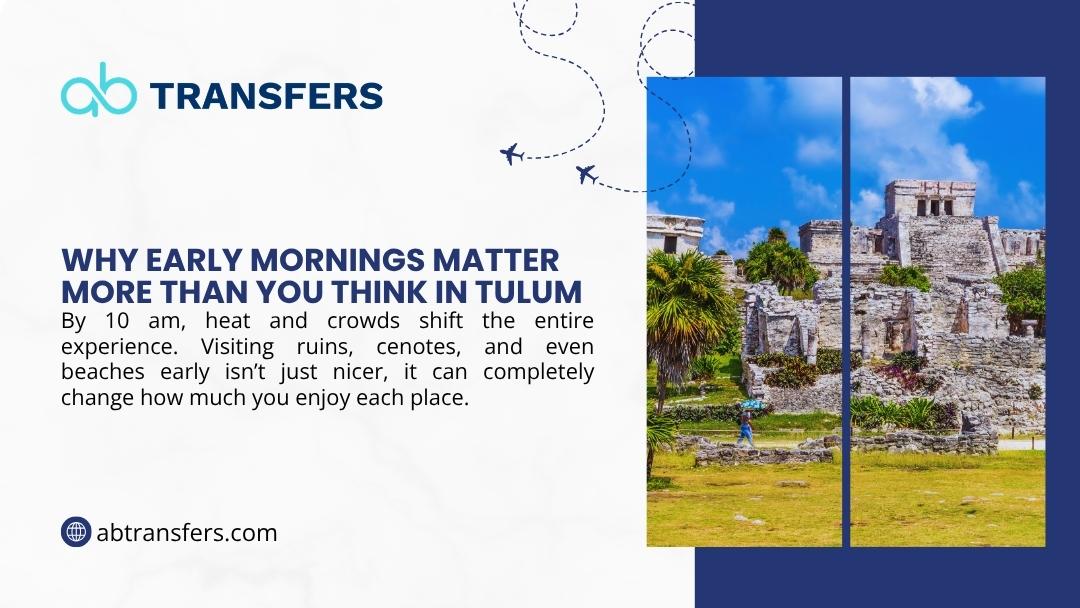
This is the day most people are quietly waiting for. The Tulum ruins aren’t the biggest in Mexico. Not even close. But they don’t need to be. What makes them stand out is where they are, perched on cliffs, facing the Caribbean. You don’t really process it properly until you’re there.
Historically, Tulum was one of the more important coastal Mayan cities, especially during the later period of the civilization. It functioned as a trading hub, which explains why it was built in such a strategic position. But even if history isn’t your focus, the setting alone carries the experience.
Entrance is around 90-100 MXN. Gates open at 8 am. If there’s one piece of advice that actually matters here, it’s this: go early. Earlier than you think. By 9 am, the place starts to fill. By late morning, it feels completely different, tighter, louder, and hotter. When you go early, you get space. You get silence. You actually see the place.
After the ruins, follow the path down to Playa Ruinas. It’s a small beach just below the site, and it’s included in your ticket. Swimming there, with the ruins visible above, is one of those moments that tends to stay with people. From there, continue south.
Playa Paraíso is the natural next stop. Wide beach, soft sand, easy water. Nothing complicated. By that point, sitting still for a while makes sense.
If you want more depth than just walking through the site, a guided visit, especially a private one, changes how you see it. The carvings, the structure, the defensive layout, it all becomes more than just shapes.
Day 2 at a glance: Early ruins → Playa Ruinas → lunch → Playa Paraíso → evening by the beach.
Day 3: Cenote Day: Beneath the Surface
Cenotes are not something you squeeze into a spare hour. If you’re going to do them properly, they deserve a full day. They’re part of what makes this region different.
The Yucatán Peninsula sits on limestone. Over time, that limestone eroded, collapsed, and exposed underground water systems. That’s what cenotes are, openings into that network. There are thousands of them across the region. Some are open and bright. Others feel like caves.
Gran Cenote is usually the first stop people hear about. And yes, it’s popular. But it’s also genuinely impressive, clear water, a mix of open sky and rock formations, light filtering through in a way that feels almost staged. If you want it quieter, go early.
Cenote Dos Ojos is a different experience altogether. More enclosed, more atmospheric. The water shifts color depending on the light, and the cave sections feel almost unreal at times.
Then there’s Calavera. Smaller, rougher, a bit more playful. People jump in. It’s not polished, and that’s the appeal.
Yal-Ku Lagoon sits further out near Akumal. It’s technically not a cenote, but it connects to the same system. The water mixes fresh and salt, which brings in marine life. It’s calmer than the open sea, which makes snorkeling easier.
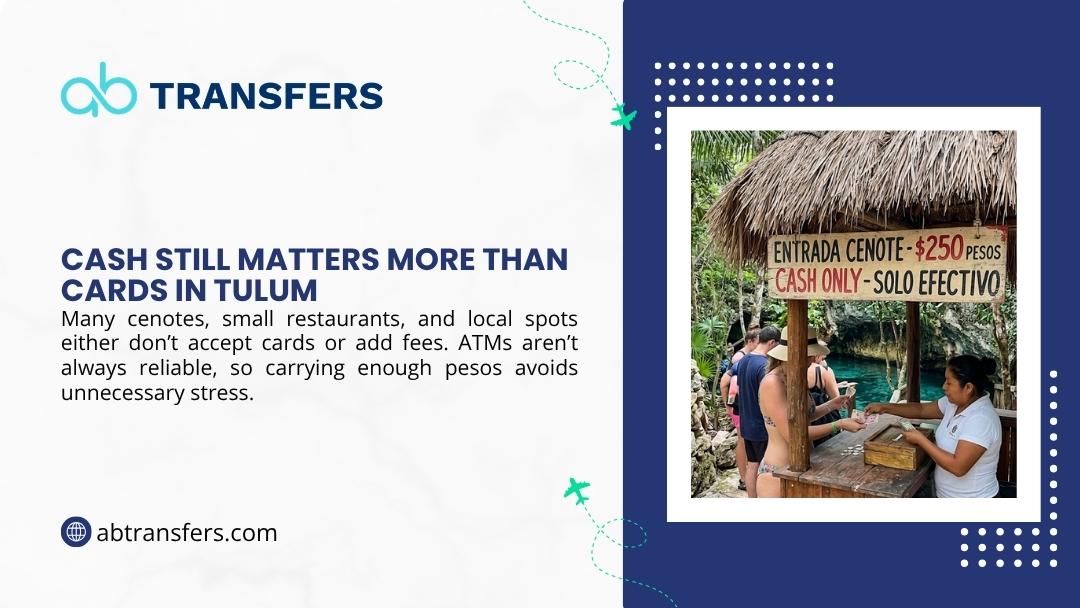
One thing that surprises people is that prices vary. Some cenotes are simple and inexpensive. Others are more developed and charge accordingly.
| Cenote | Distance | Best For | Fee |
| Gran Cenote | 5 km | First visit | Approx. 500 – 600 MXN |
| Dos Ojos | 25 km | Cave experience | Approx. 350 – 450 MXN (Park Free) |
| Calavera | 8 km | Jumping | Approx. 250 – 350 MXN |
| Zacil-Ha | 9 km | Families | Approx. 150 – 200 MXN |
| Yal-Ku | 38 km | Snorkeling | Approx. 300 – 350 MXN |
Many travelers prefer a structured Tulum cenote tour to visit multiple locations efficiently. If you don’t want to deal with taxis between stops, a structured private tour makes the day more than you might expect.
Day 3 at a glance: Cenotes early → multiple stops → relaxed evening.
Day 4: Chichén Itzá and Valladolid
This is the longest day. No way around it. Chichen Itza sits about two hours from Tulum. That means leaving early. Not optional, necessary. Around 7 am works. The difference between arriving at opening and arriving mid-morning is huge.
Early, the site feels open. Manageable. You can actually take it in. Later, it becomes crowded and noticeably hotter.
El Castillo, the main pyramid, is the focal point. You’ve seen it before, of course. But scale doesn’t translate well in photos. Standing in front of it changes that.
On the way back, Valladolid is worth stopping in. It’s quieter. Slower. More local. The main square, the cathedral, the streets, nothing feels staged.
Cenote Zací sits right in town, which makes it easy to include without detouring. A structured private tour helps here, mainly because it removes the need to constantly check the time.
Day 4 at a glance: Early departure → Chichen Itza → Valladolid → return.
Day 5: Cobá and the Jungle
Cobá feels different the moment you arrive. It’s not on the coast. It’s surrounded by jungle, and that changes everything: the air, the sound, the way the site unfolds.
The main pyramid, Nohoch Mul (also known as Ixmoja), is one of the tallest (approx. 42 meters) in the Yucatan Peninsula. What makes Cobá stand out isn’t just the structures. It’s how spread out everything is. You move between sections by walking, biking, or taking a tricycle taxi.
And the environment stays present the whole time. It doesn’t feel curated. It feels active. Adding a cenote nearby rounds out the day, and the ones in this area are usually quieter than those closer to Tulum.
Day 5 at a glance: Cobá → jungle exploration → cenote → return.
Day 6: Ek Balam and Las Coloradas
This is where the itinerary shifts slightly away from the usual route. Ek Balam is less visited, but it shouldn’t be. The site allows climbing in certain areas, which changes how you experience it. The view from the top stretches out over dense jungle, no buildings, no coastline, just green.
Las Coloradas, the Pink Lakes, are the second half of the day. Pink colour is caused by red algae (Dunaliella Salina), plankton. The color varies depending on light (late afternoon gives a rose/orange tone) and conditions (in the dry season from May to September, water gives a neon pink, and in the cloudy, rainy season, it gives a brown, pale, or orange tone). Still, when it’s strong, it’s unmistakable.
It’s not something you see every day. Because fewer people take this route, the day tends to feel quieter overall.
Day 6 at a glance: Ek Balam → Pink Lakes → return.
Day 7: Slow Morning, Then Leave
Last day. No plans needed. Wake up early if you can. The beach in the morning feels completely different, quieter, cooler, less crowded. Walk. Sit. Have breakfast somewhere simple. Then pack, check out, and head back.
If you’re returning to Cancún, allow time. Traffic can change without warning. If you’re flying from Tulum airport, the trip is shorter, but still worth planning properly.
Day 7 at a glance: Beach → breakfast → departure.
Where to Stay: Matching Your Budget to the Right Area
The question of where to stay in Tulum matters more than in most destinations because the town’s geography creates real trade-offs. The beach zone (Zona Hotelera) offers immediate access to the Caribbean but runs considerably more expensive and involves taxis or bikes to reach restaurants and the town center. Tulum town, especially around Aldea Zama, the planned residential neighborhood between the two zones, gives you a middle-ground option with good access in both directions.
| Area | Best For | Price Range (per night) |
| Tulum Beach Zone | Beachfront access, luxury eco-hotels | $150–$600+ USD |
| Aldea Zama | Balance of access, mid-range boutique hotels | $80–$250 USD |
| Tulum Town / Centro | Budget, local food, nightlife access | $30–$120 USD |
| Near Cobá Road | Privacy, jungle atmosphere, cenote proximity | $60–$200 USD |
Note: Prices increase or decrease depending on the season. Whatever you choose, book ahead for November through April. Between February and May is the best time to visit Tulum to minimize rain and visit when it’s not too hot. Peak season hotel availability disappears quickly, particularly over Christmas, New Year, and US spring break.
Getting around without frustration
| Option | Reality |
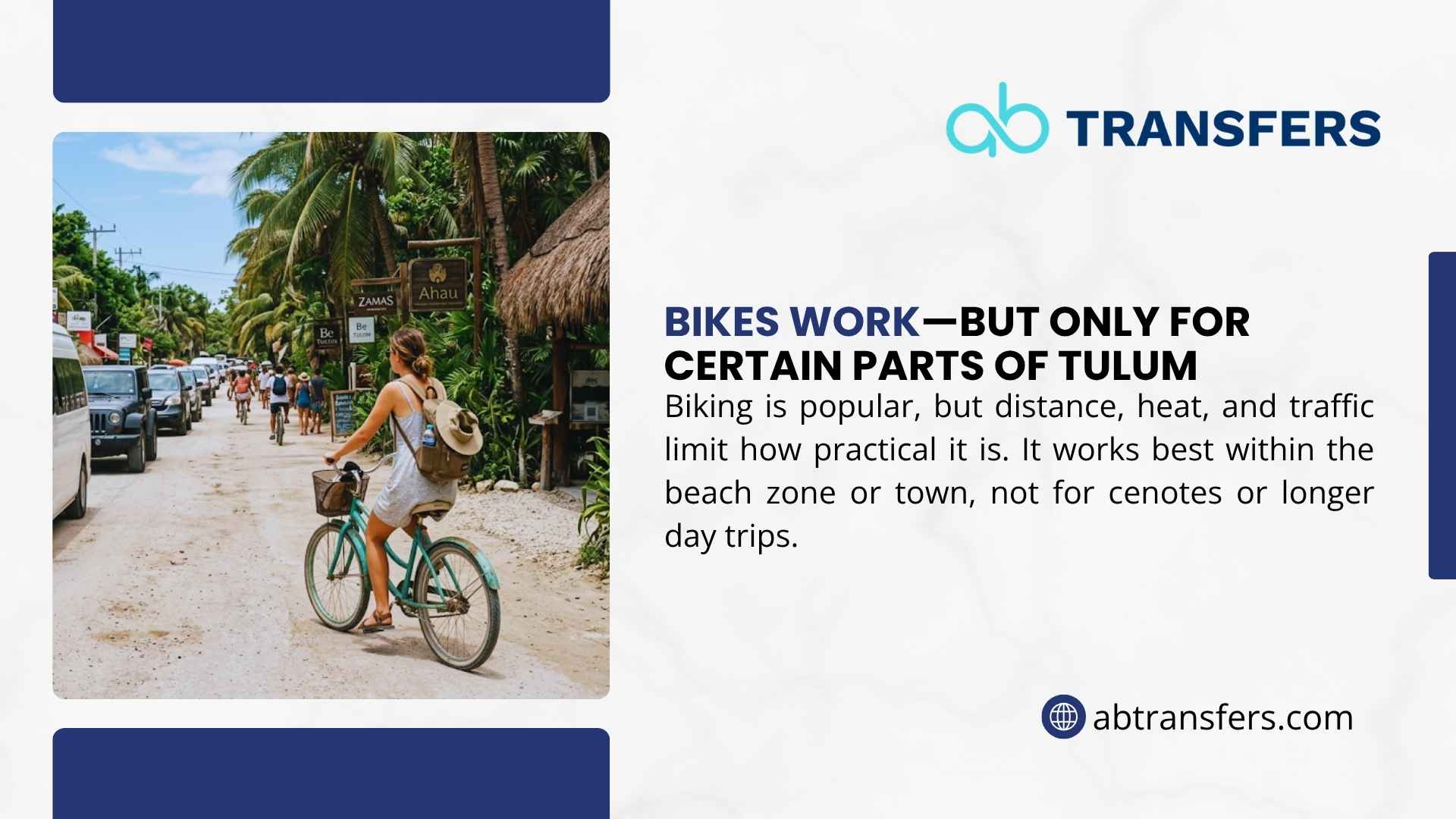
| Bike | Works, but limited |
| Scooter | Flexible, still exposed to the weather |
| Private transport | Easiest for longer distances |
Distances in Tulum aren’t always obvious. What looks short can take longer than expected, especially in the heat.
FAQs
What is the best way to follow a Tulum itinerary for 7 days?
The most effective approach is to mix beach time, cultural visits, and day trips while allowing flexibility between activities.
Is Tulum close to Cancun?
Tulum is about 2 hours from Cancun by road, making it accessible but separate in atmosphere.
Are cenotes safe to visit?
Yes, most cenotes are safe when following basic guidelines and choosing well-maintained locations.
What is the main attraction in Tulum?
The coastal Mayan ruins are the most iconic, but cenotes and beaches are equally important.
Can you explore Tulum without a car?
Yes, but transport options like bikes or private transfers make moving between areas easier.
Is Tulum expensive compared to other places in Mexico?
The beach zone tends to be expensive, while Tulum town offers more affordable options.
What makes Tulum different from other destinations?
The combination of jungle, beaches, and ancient history creates a setting that feels less structured and more natural.
One last thing before you plan
A tulum itinerary 7 days works best when the logistics are sorted before you land. That means knowing how you’re getting from Cancún to Tulum on arrival, which day trips you want to prioritize, and whether you want private or self-guided transport for each.
Some travelers prefer figuring everything out themselves. Others choose to rely on local experts who already understand the region, especially when it comes to transport and day trips.
If you want your trip to feel effortless from the moment you arrive, whether it’s airport transfers, day trips, or exploring cenotes and ruins without worrying about logistics, working with a trusted local team like AB Transfers can make things significantly easier.
It’s not about adding more to your itinerary. It’s about making the experience smoother, more flexible, and closer to how Tulum is meant to be explored. Less time figuring things out. More time actually enjoying where you are.
